What arrangement of material may lead to convective motion?
You lot may have noticed that if you leave a cup of hot java on a table, it gets cold in some time. This is because estrus is lost to the surroundings. Thus, heat transfer is the transfer of heat or thermal energy between physical systems. And so when in that location is a temperature difference between ii bodies, heat is transferred from the hot body to the colder torso. At that place are iii mutual modes of heat transfer – conduction, convection, and radiations. In this article, nosotros will hash out oestrus transfer through convection.
Table of Contents:
- What is Convection
- How is Heat Transferred through Convection
- Types of Convection
- Convection Examples
- Frequently Asked Questions – FAQs
What is Convection?
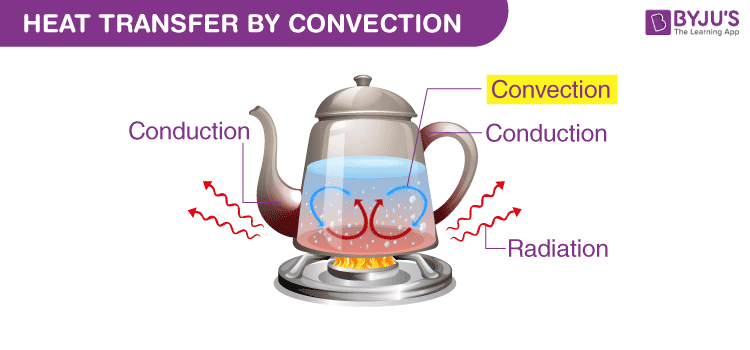
Convection is the process of heat transfer by the bulk movement of molecules inside fluids such every bit gases and liquids. The initial heat transfer between the object and the fluid takes place through conduction, only the bulk oestrus transfer happens due to the motion of the fluid.
- Convection is the process of oestrus transfer in fluids by the actual move of matter.
- It happens in liquids and gases.
- It may exist natural or forced.
- It involves a bulk transfer of portions of the fluid.
How is Rut Transferred through Convection?
When a fluid is heated from beneath, thermal expansion takes place. The lower layers of the fluid, which are hotter, become less dense. We know that colder fluid is denser. Due to buoyancy, the less dumbo, hotter role of the fluid rises up. And the colder, denser fluid replaces it. This process is repeated when this part also gets heated and rises up to be replaced by the colder upper layer. This is how the heat is transferred through convection.
Types of Convection
At that place are two types of convection, and they are:
- Natural convection
- Forced convection
Natural convection: When convection takes place due to buoyant strength as there is a difference in densities caused past the difference in temperatures it is known every bit natural convection.
Examples of natural convection are oceanic winds.
Forced convection: When external sources such as fans and pumps are used for creating induced convection, it is known as forced convection.
Examples of forced convection are using h2o heaters or geysers for instant heating of h2o and using a fan on a hot summer mean solar day.
Forced convection is related to Newton'due south law of cooling, which is given every bit:
\(\begin{array}{l}P = \frac{dQ}{dt}=hA(T-T_{0})\cease{array} \)
Where,
-
\(\begin{array}{fifty}P = \frac{dQ}{dt}\end{assortment} \)
is the rate at which rut is transferred - h is the convection heat-transfer coefficient
- A is the exposed surface area
- T is the temperature of the immersed object
- T0 is the temperature of the fluid which is under convection
The value of the heat-transfer coefficient h depends on:
- Density
- Viscosity
- Thermal electrical conductivity
- Specific heat capacity
To know more almost convection methods of heat transfer in particular, click on the video below.

Convection Examples
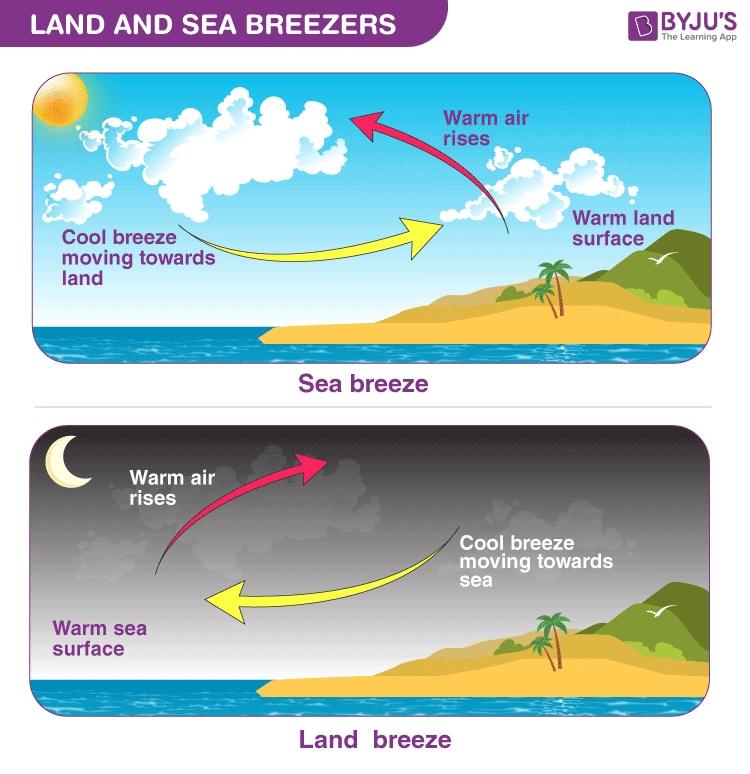
As we have read previously, convection can either be forced or natural. 1 of the near common examples of natural convection is the phenomena of the sea and state breeze.
- Sea cakewalk: This miracle occurs during the day. The lord's day heats upwards both the body of water surface and land. As the sea has a greater heating capacity, information technology absorbs much of the sunday's energy but gets warmed up much slower than the land. Equally a outcome, the temperature above the country rises and heats the air in the atmosphere higher up it. Warm air is less dense, and hence, it expands, creating a depression-force per unit area area over the land almost the coast. Meanwhile, there is relatively loftier pressure level over the sea. The difference in air pressure causes the air to flow from sea to land. The sudden gush of current of air felt due to this is known equally the sea breeze.
- Land Cakewalk: This phenomenon occurs during the night when the state of affairs reverses. As the sunday sets, the land and body of water start cooling downwardly. The land rapidly loses heat when compared to water due to the differences in heat capacity. Consequently, the temperature of the sea is relatively higher, which creates depression air pressure there. This sets upward a flow of cool breeze offshore, known every bit the land breeze.
The examples of forced convection include a water pump in an machine engine, suction devices, forced air heating systems, etc.
Also Read:

Frequently Asked Questions – FAQs
State oestrus definition
According to the heat definition, estrus is a grade of energy that can be transferred from one medium to some other through diverse processes like conduction, convection and radiation.
What is convection?
Convection is the process of heat transfer by the majority motility of molecules within fluids such as gases and liquids.
On what factors the rut-transfer coefficient (h) depends upon?
The value of heat-transfer coefficient (h) depends on:
State True or False: Sea breeze is an example for natural convection.
What are the types of convection?
Types of convection are:
Hope you have understood the heat definition and the process of heat transfer in item. To know more than, visit BYJU'Due south – The Learning App!
Source: https://byjus.com/physics/heat-transfer-convection/
0 Response to "What arrangement of material may lead to convective motion?"
Enregistrer un commentaire